Callaway Apex Ai200 Irons
Callaway — Callaway Apex Ai200 Irons · By Andy · Feb 1, 2026
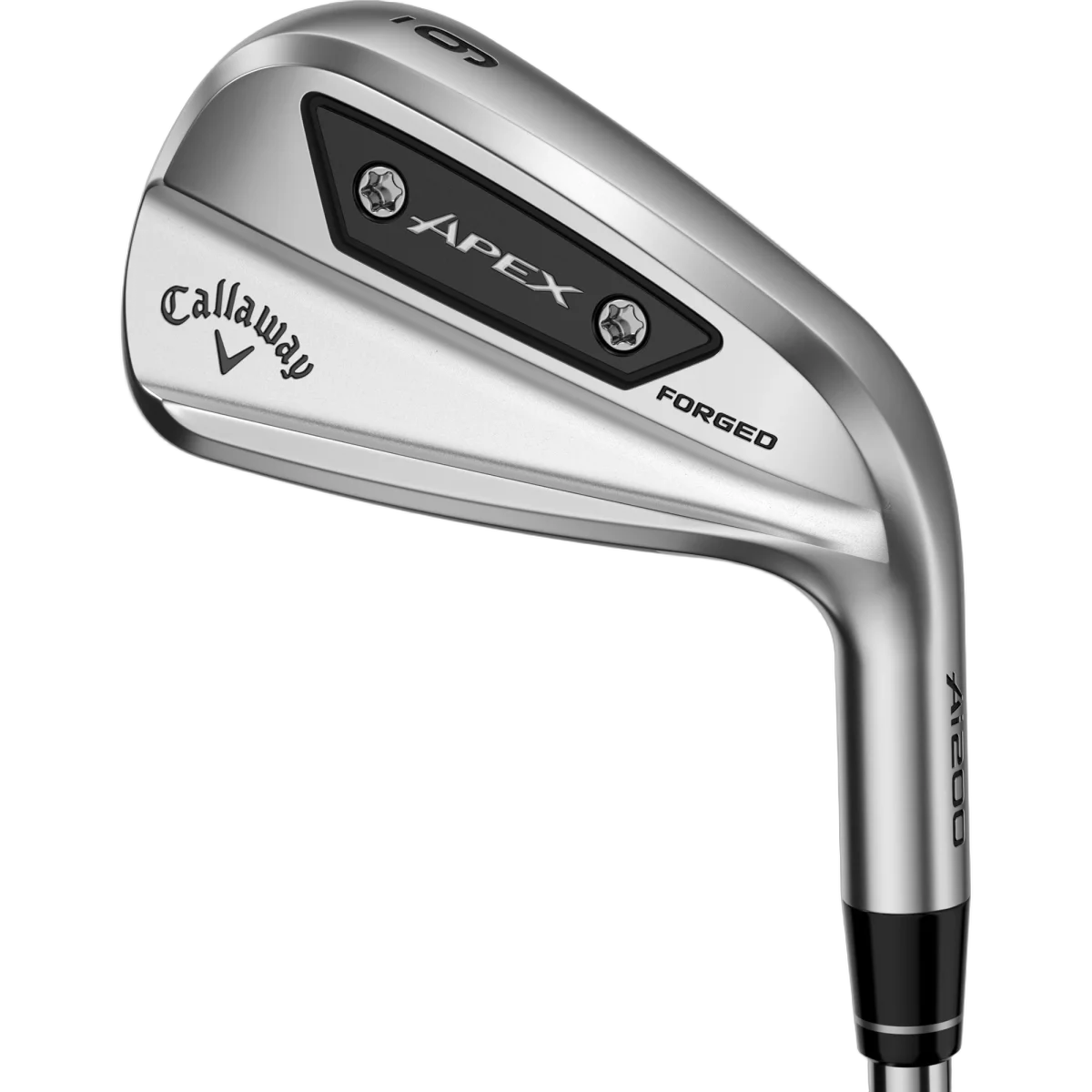
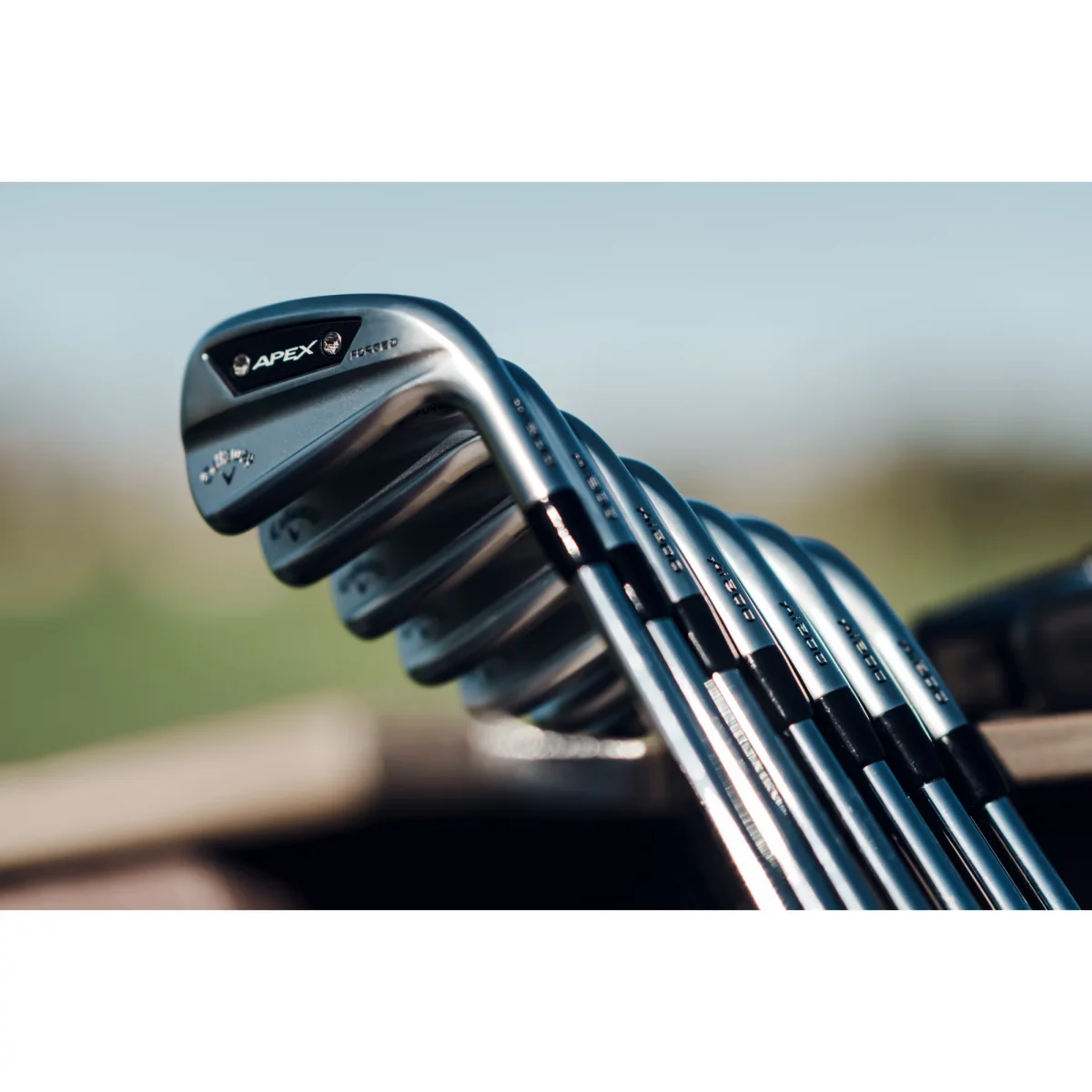
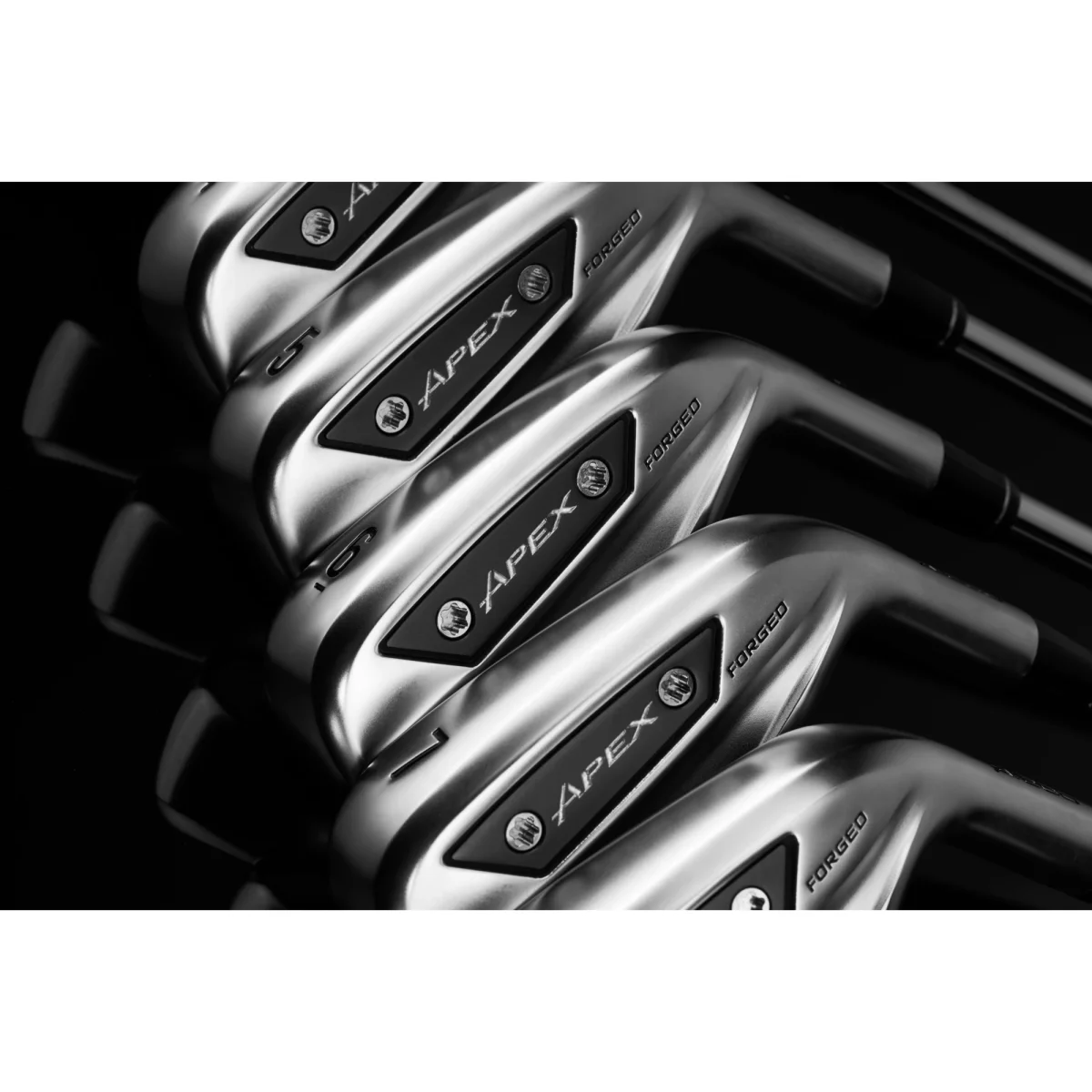
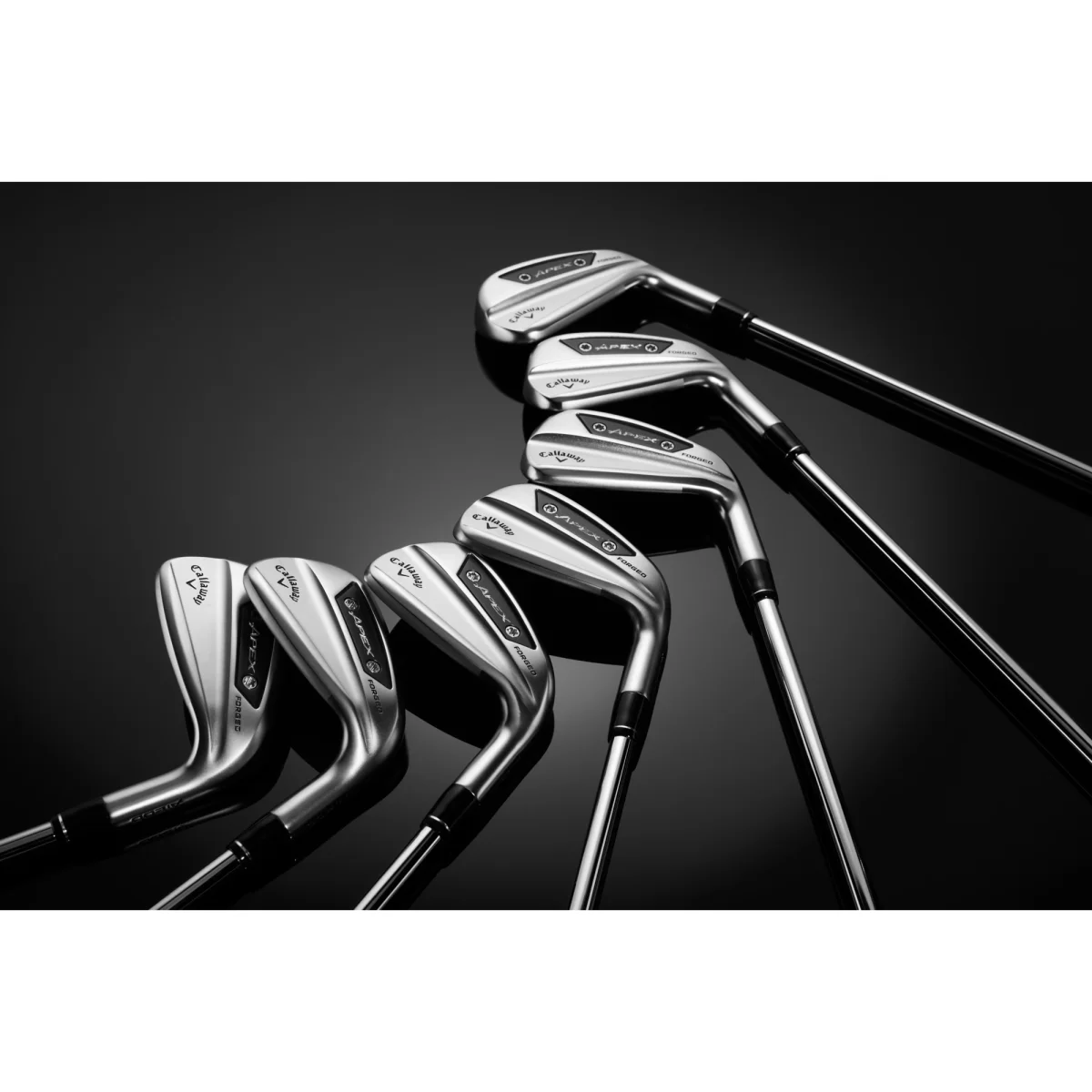
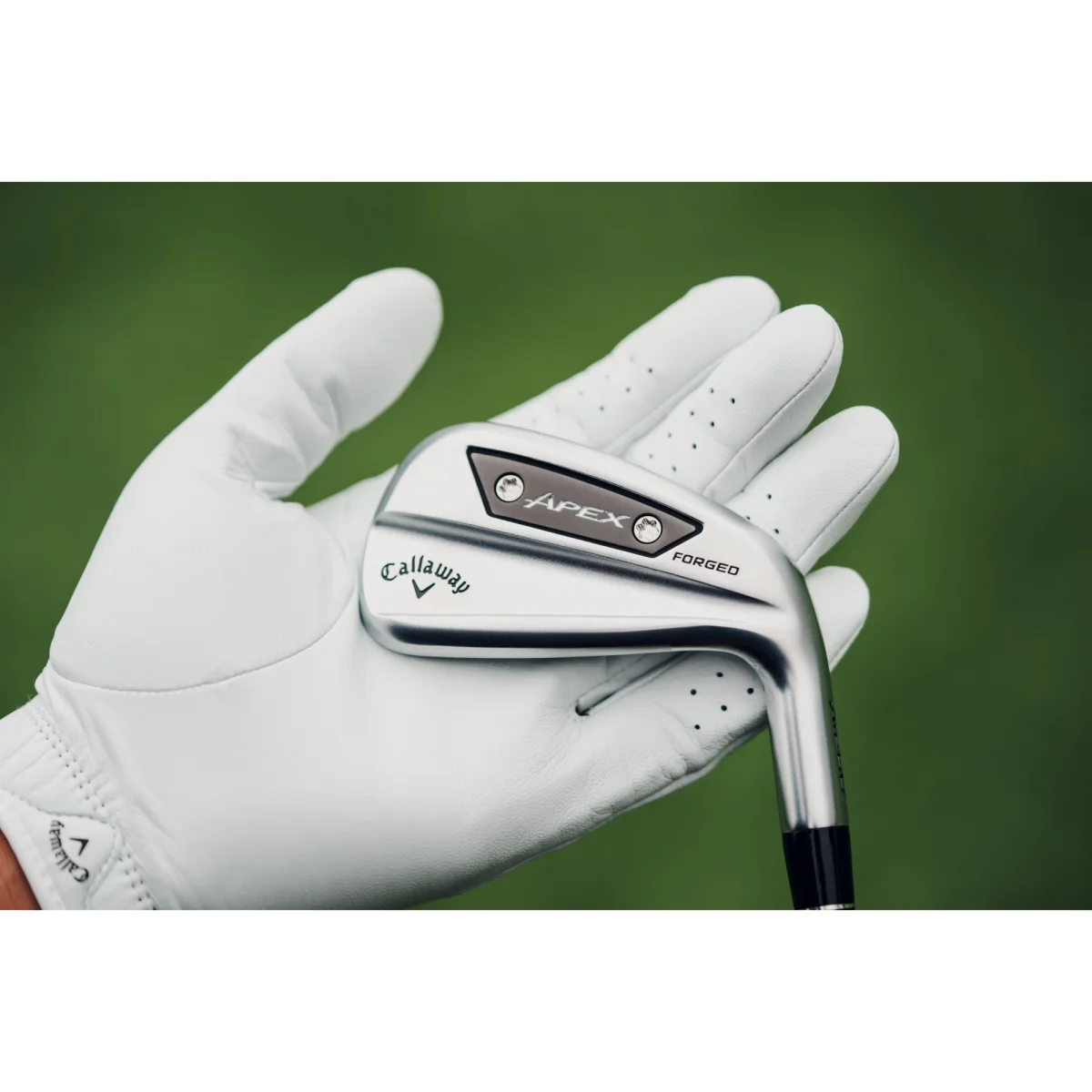
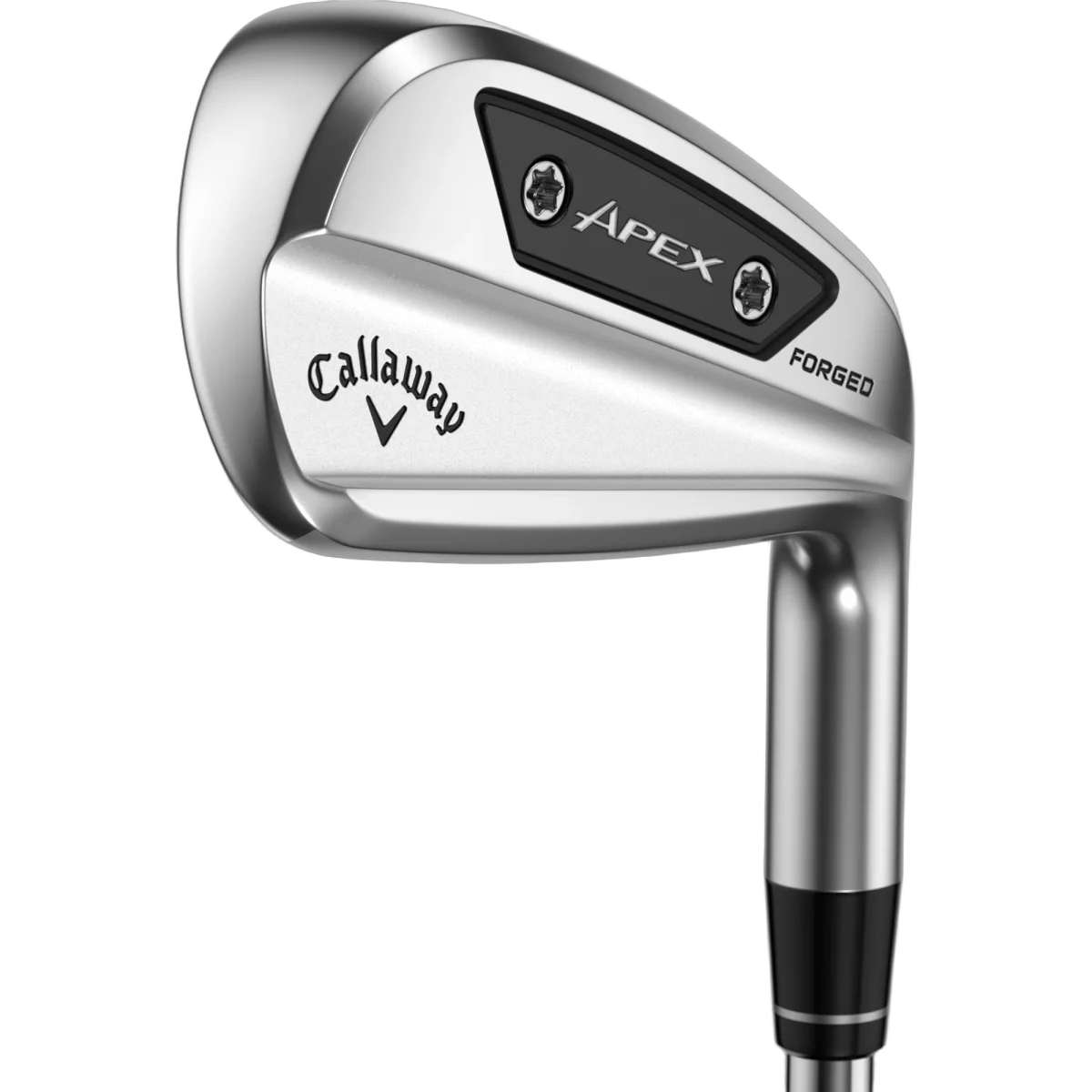
Callaway's most complete players' distance iron fuses a forged 455 face cup to a forged hollow body — and the AI Smart Face technology delivers on its promise of consistency in a way that genuinely changes how you think about approach shots.
The Big Picture
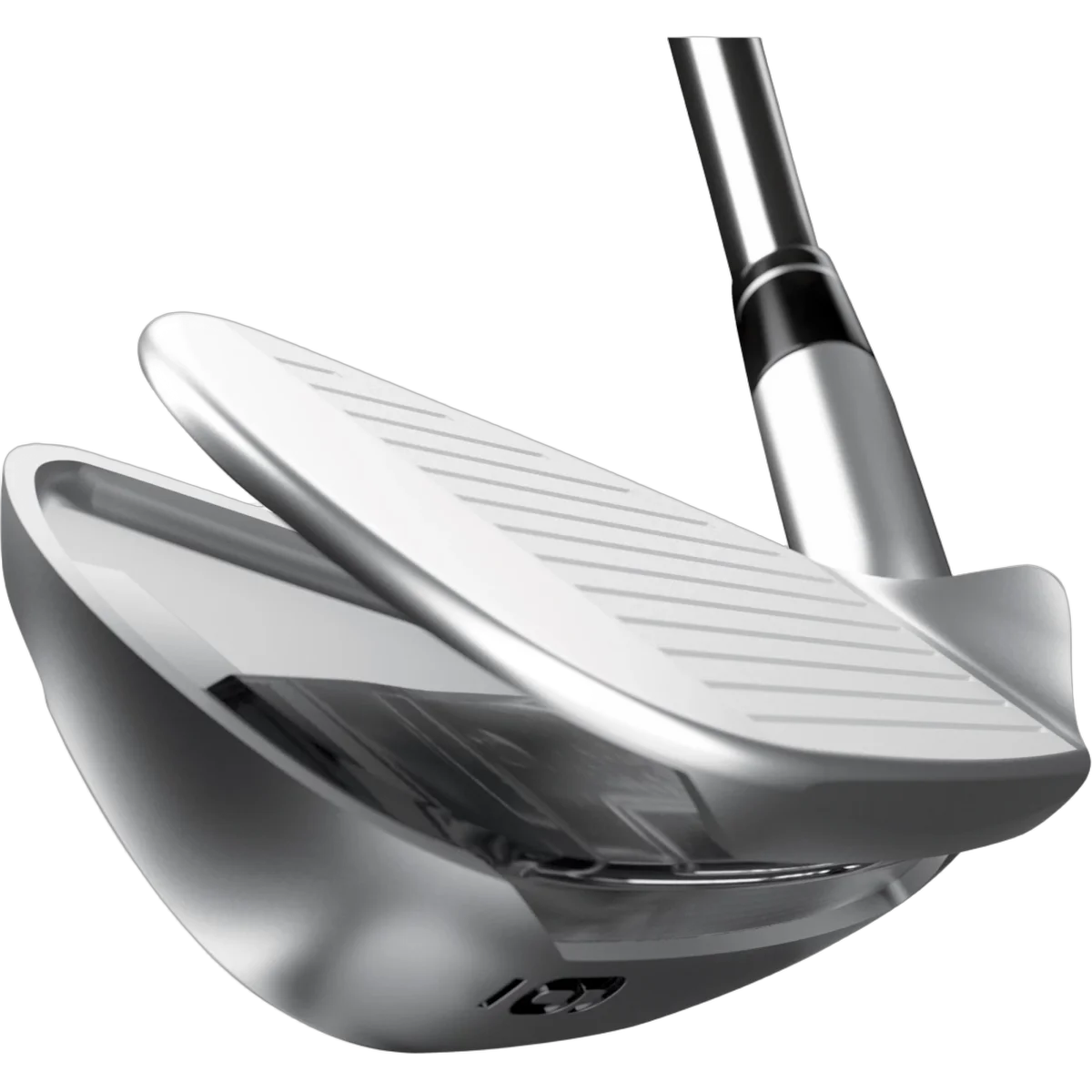
The Apex name has been a Callaway staple since 2014, evolving through multiple generations into one of the most recognizable iron lines in golf. The Ai200 represents the latest chapter: a forged hollow-body players' distance iron built around a forged 455 Carpenter steel face cup brazed to a 1020 carbon steel body. That dual-forged construction is significant — most hollow-body irons in this category use cast components somewhere in the build, and the all-forged approach here directly impacts feel.
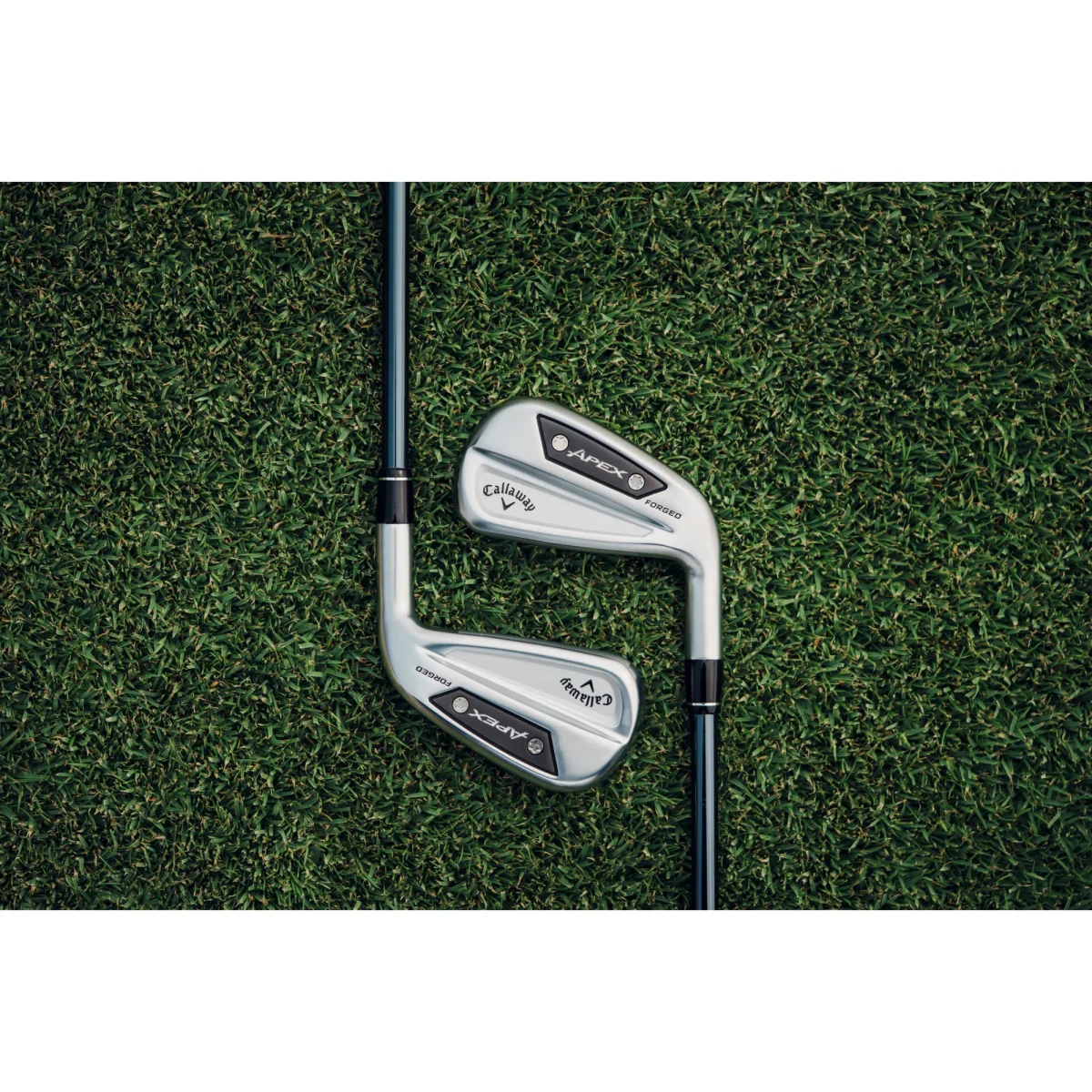
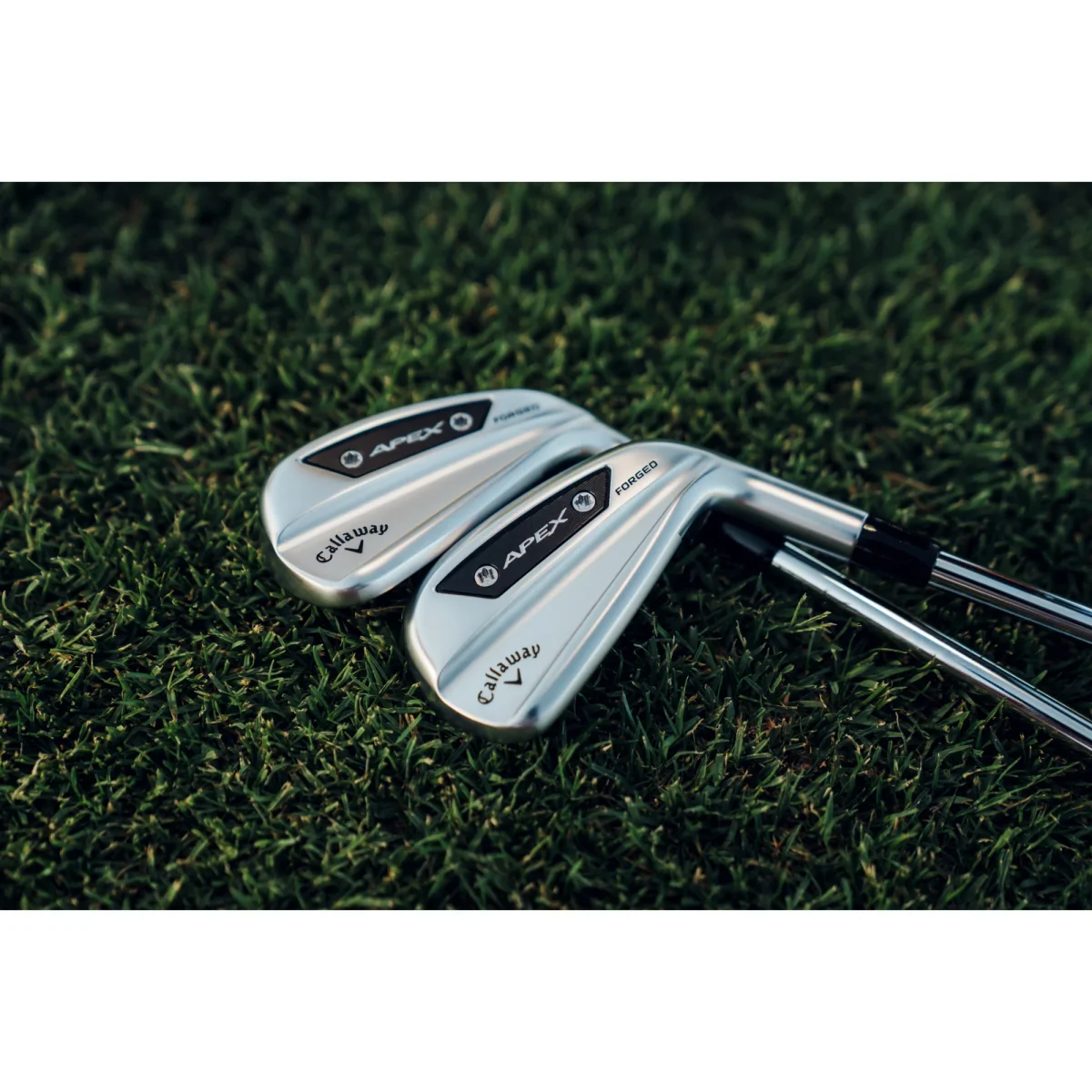
Two Apex irons resting on green grass showing cavity backs
The headline technology is the Ai Smart Face, carried forward from the Paradym Ai Smoke series. Using real golfer swing data fed through artificial intelligence, Callaway has optimized face thickness variations across the hitting area to produce more consistent ball speeds, launch angles, and spin rates — particularly on shots hit toward the lower heel and toe sections where the 455 face cup extends further to allow more flex. Behind the face, precision MIM (metal injection molding) weights locate the center of gravity through the set to tune each iron for optimal launch, and a Dynamic Sole design improves turf interaction.
The Ai200 slots between the more compact Apex Pro/CB and the larger Ai300 in Callaway's lineup. It's aimed at low-to-mid handicappers who want distance, control, and forged feel in a profile that's sleeker than game-improvement but more forgiving than a traditional players' iron.
At Address
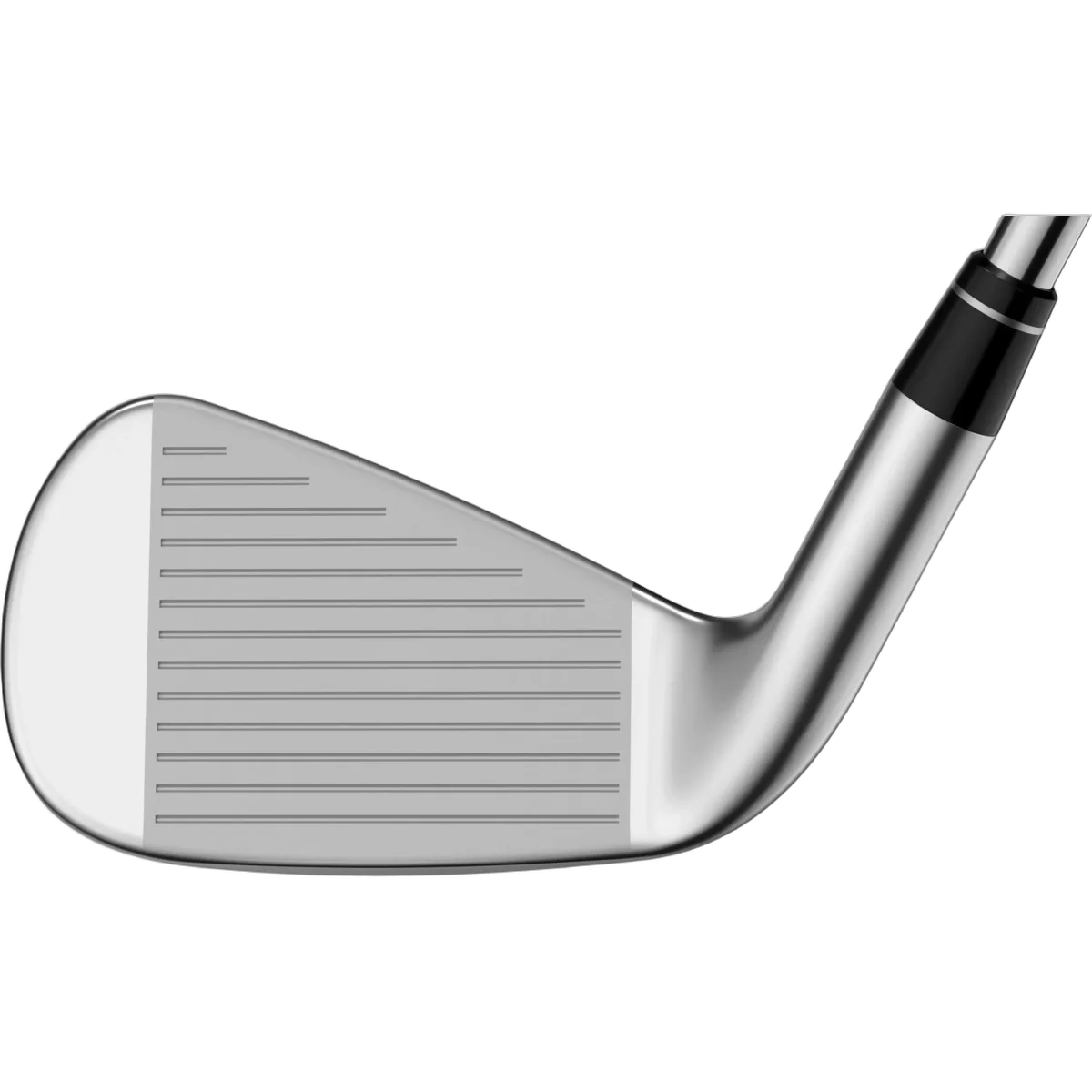
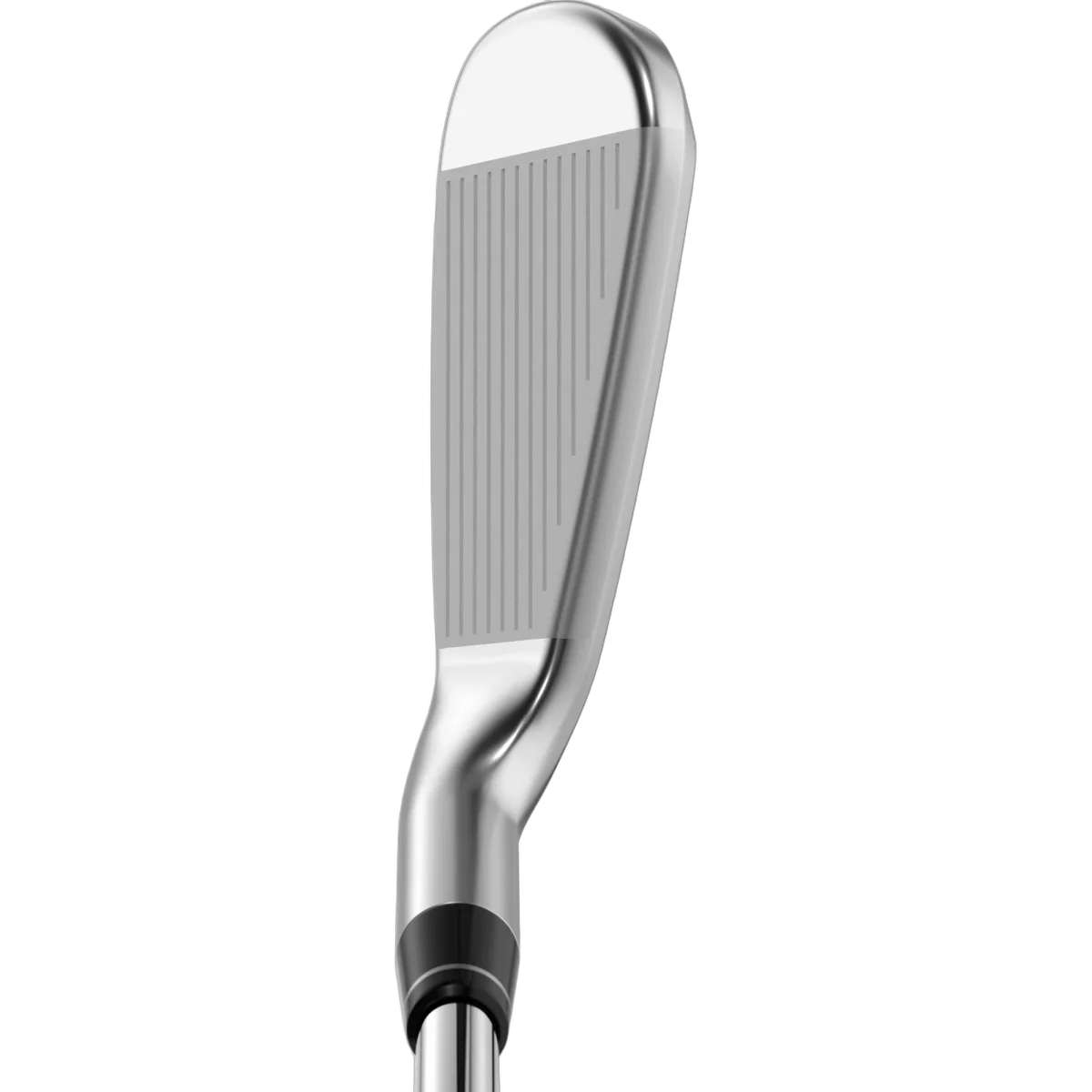
The Ai200 is clearly aimed at better players. The head is smaller than the Ai300 with a thinner topline, shorter blade length, and less offset — though still noticeably chunkier than the Apex Pro or CB. Looking down at it, the profile is compact enough to inspire confidence without screaming game improvement.
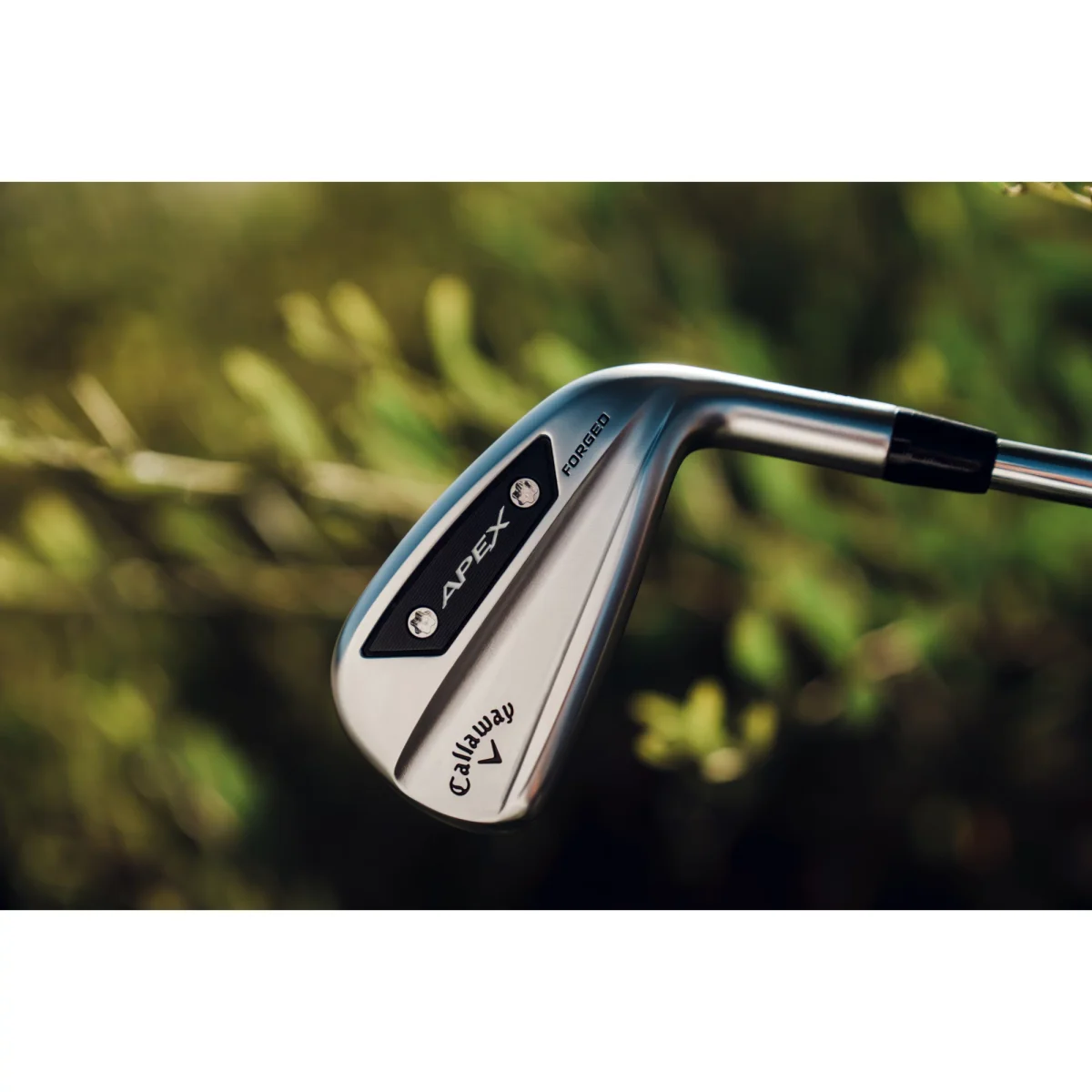
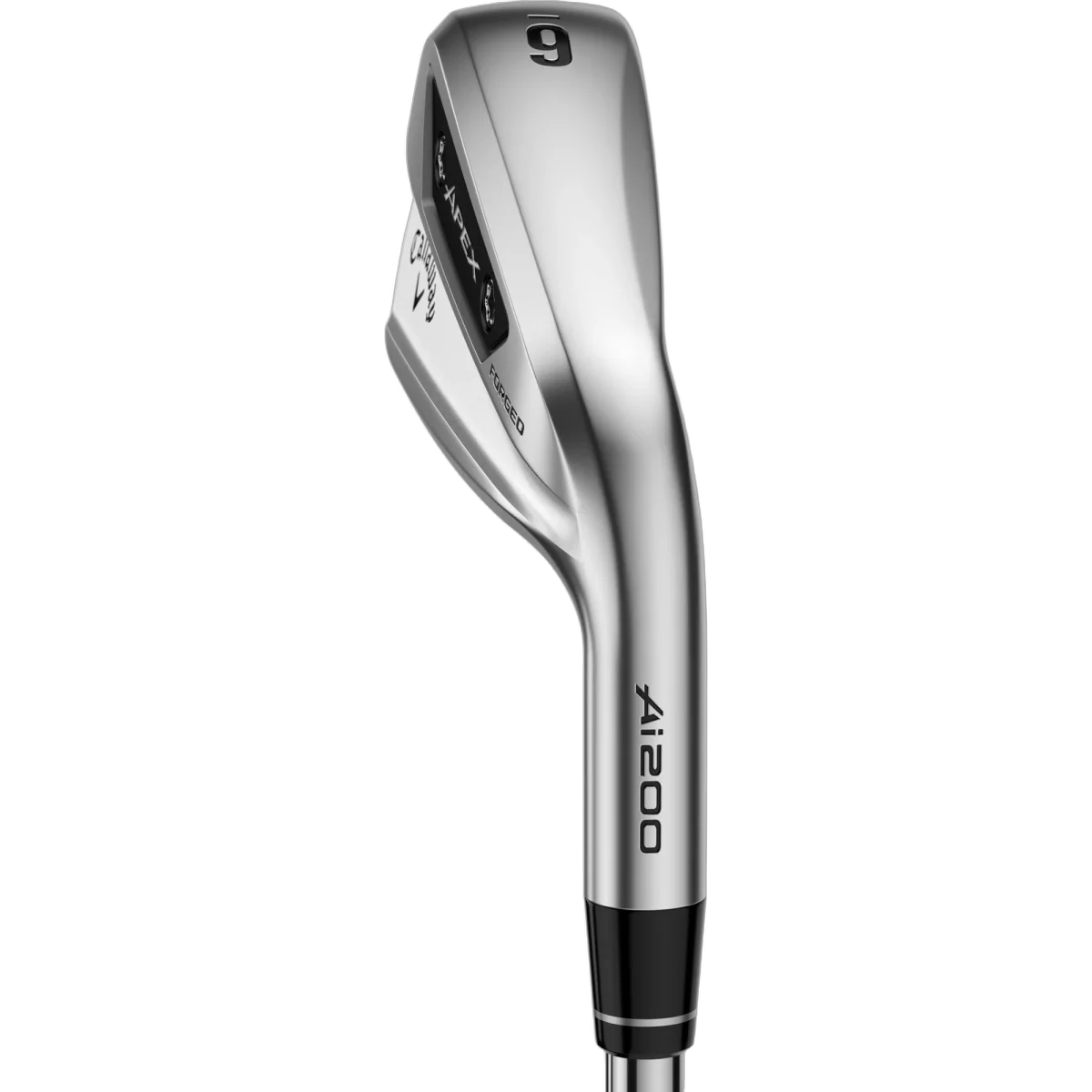
There's a progressive offset story through the set that's worth noting. The 4-iron carries meaningful offset that diminishes steadily through the mid-irons and nearly disappears in the wedges. Some players will appreciate that; others may find the long-iron offset more prominent than expected for the "players' distance" label. The satin finish with the black MIM weight on the cavity back looks premium and cohesive with the rest of the Apex line — Callaway has done a good job maintaining visual continuity from the MB all the way through to the Ai300, which makes combo sets seamless.
Sound & Feel
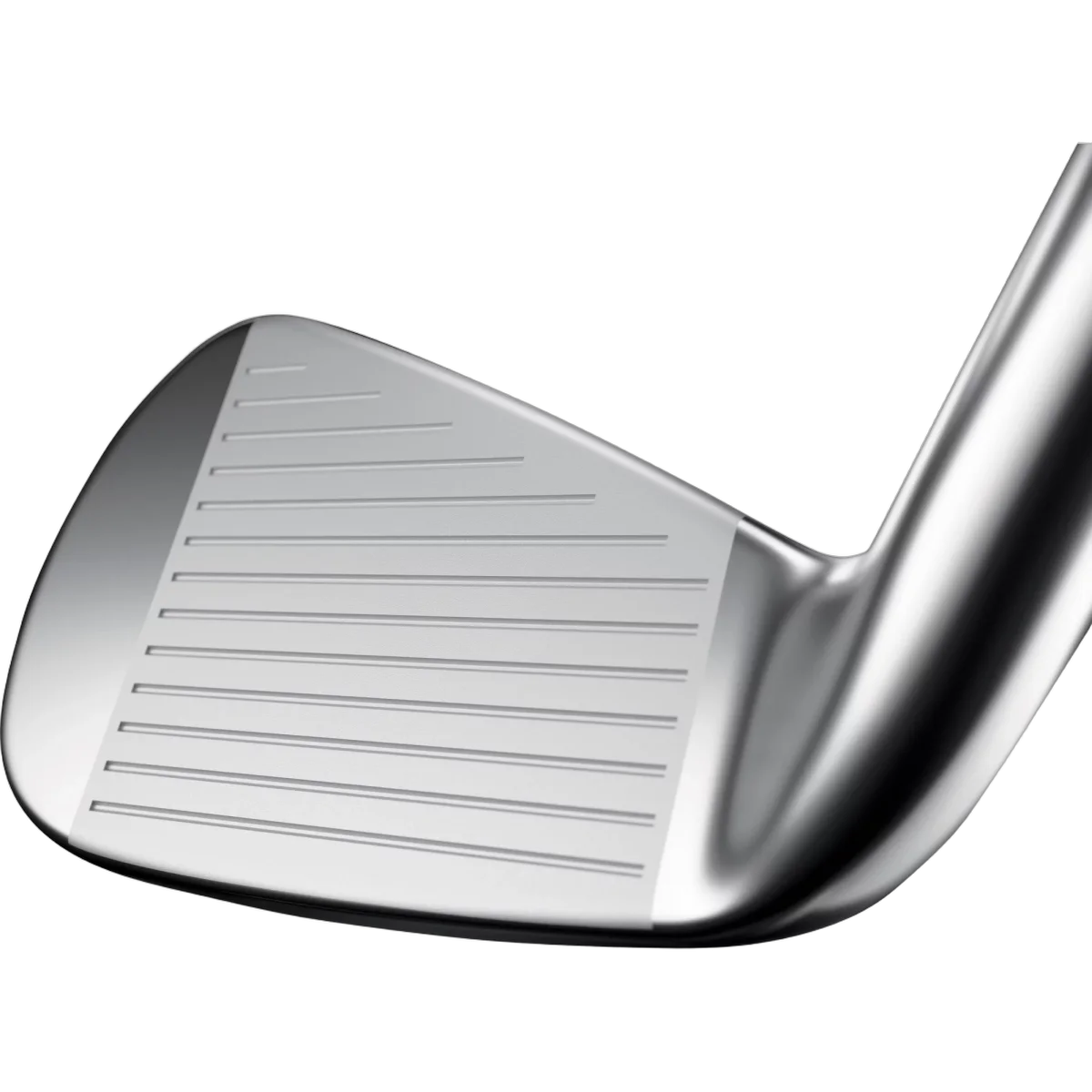
This is where the all-forged construction pays off. The Ai200 delivers an impressively soft feel at impact for a hollow-body iron, with urethane microspheres inside the head dampening the harsh vibrations you typically get from this construction type. Center strikes feel solid yet soft — there's a density to the impact that communicates quality without the tinny sharpness that plagues lesser hollow-body designs.
Close-up of iron face showing grooves on white background
The sound sits in a good place: a slightly firm, quiet click that's crisp without being metallic. It's not quite the buttery softness of the Apex Pro or CB — one of my testers described it well as "refrigerated butter versus room temperature" — but for a hollow-body iron packing this much technology, the feel gap is remarkably small. Heel and toe mishits produce firmer feedback than center strikes, but without the punishing harshness you'd get from a solid-body players' iron. You know where you hit it, but the information arrives politely.
Performance
Ball Speed & Distance
The forged 455 face cup generates serious ball speed. I was seeing around 130 mph consistently with the 7-iron, and the carry distances reflected it — 171 yards with my 7-iron was typical, with the 5-iron picking up an easy 8 yards over my previous Apex CB. The 7-iron sits at 30 degrees, which is on the stronger side but not egregiously so — Callaway has pulled back slightly from the aggressive loft-jacking of a few years ago.
What impressed me more than raw distance was the consistency of that distance. During extended testing, my carry numbers clustered in a tight window even as strike quality varied. A fitter I worked with showed me the data — shots that would normally produce a 20-yard spread on my old irons were staying within a much tighter band. That's the Ai Smart Face doing exactly what it's supposed to do: normalizing ball speed across the face so your misses fly closer to your makes.
Launch & Spin
The launch profile runs high for the category, with the MIM weights positioning CG low enough to produce easy elevation even in the long irons. Peak height with my 7-iron sat around 40 yards, with descent angles consistently in the 48-50 degree range at my swing speed — well into the territory where the ball stops on the green without needing to rely on soft conditions.
Spin is where the Ai200 tells an interesting story. The rates tend to run in the mid-to-upper range for a players' distance iron — I was seeing around 5,000-5,500 RPM with the 7-iron — and more importantly, the spin stayed remarkably consistent shot to shot. Draws, slight fades, even pulls all produced spin within a few hundred RPM of each other. That spin consistency is arguably more valuable than the raw number itself, because it means your distance variance tightens and you can trust the number you're swinging for.
Callaway has specifically improved spin behavior over the previous Paradym generation — the Ai Smoke irons were better, and the Ai200 sets a new bar for optimized launch, spin, and ball speed in the Apex line.
Dispersion & Shot Shape
The dispersion story is the Ai200's strongest selling point. My testing showed remarkably tight clustering even on imperfect strikes — pulled shots that would normally fly long and left were instead staying closer to the target line with less distance loss than expected. One fitting session produced a 4-yard carry spread between 150 and 190 yards with the 7-iron — the kind of number that genuinely changes your confidence on approach shots.
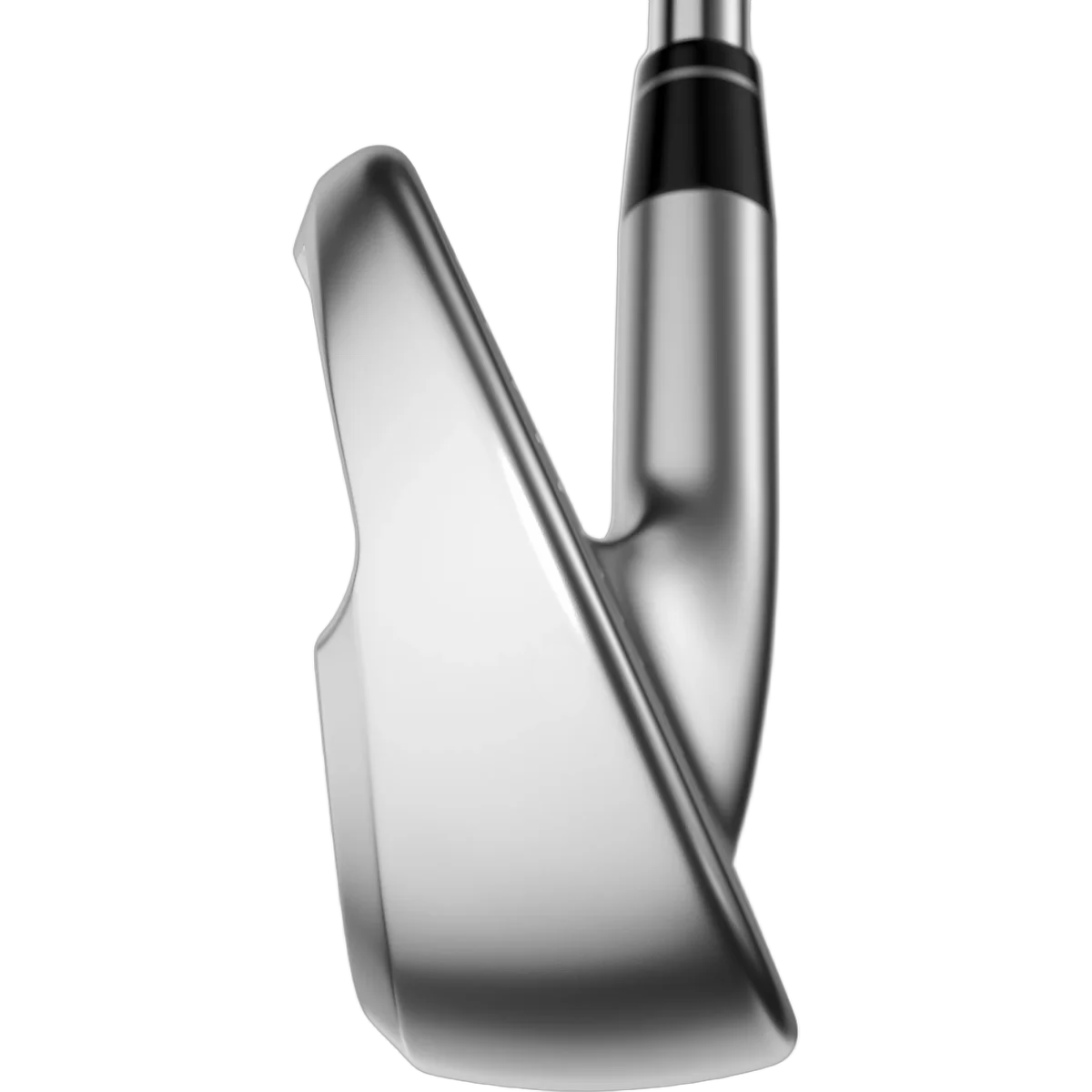
Angled view of sole and face from below on white background
The forgiveness profile is strong for the category. The hollow-body construction keeps ball speeds relatively stable across the face, and I was particularly impressed with performance low on the face — thin strikes that would normally come in hot and low still carried decent height and stopped on the green. The expanded 455 face cup into the heel and toe regions contributes to this; the flex pattern is wider than a traditional solid-body iron.
Shot shape tends toward neutral with no strong draw or fade bias. There's some workability here for shaping shots, but the Ai200 is primarily designed for consistency rather than creativity. If you're a player who wants to flight the ball both ways on demand, the Apex Pro or CB will give you more control; if you want the same reliable trajectory shot after shot, the Ai200 delivers.
MSRP: ~$999 (graphite) / ~$949 (steel) — varies by configuration
Verdict
The Callaway Apex Ai200 is a genuinely impressive players' distance iron that earns its place at the top of the category. The all-forged construction produces feel that punches well above the hollow-body class, the Ai Smart Face delivers measurable consistency improvements in ball speed and spin, and the dispersion tightening is the kind of performance gain that directly translates to lower scores through more greens in regulation.
The progressive design is thoughtful — the long irons carry the offset and sole width needed to help with launch, while the short irons clean up nicely for scoring precision. The spin behavior marks a real step forward for Callaway, with the Ai200 producing enough spin with enough consistency to hold greens at high ball speeds — something earlier Paradym-era irons struggled with.
The trade-offs are modest. The offset in the long irons may be too prominent for some better players' eyes. The profile, while compact for the category, is still chunkier than a true players' iron. And slower swing speeds may find the long irons don't produce quite enough trajectory to maximize stopping power, though the mid and short irons are outstanding regardless of speed.
Stock shafts are the True Temper Dynamic Gold Mid 100 in steel and UST Mamiya Recoil DART HDC 80 in graphite. Available 4-AW in right and left hand, with a Sweet Spot Combo Set option pairing Ai200 short irons (7-AW) with Ai300 long irons — a smart configuration for players who want extra help at the long end.
For the mid-to-low single-digit handicapper who wants forged feel, serious distance, and the kind of approach-shot consistency that shaves strokes, the Ai200 belongs on the short list.